Dr. Gymbro
←

#knee pain

3 articles
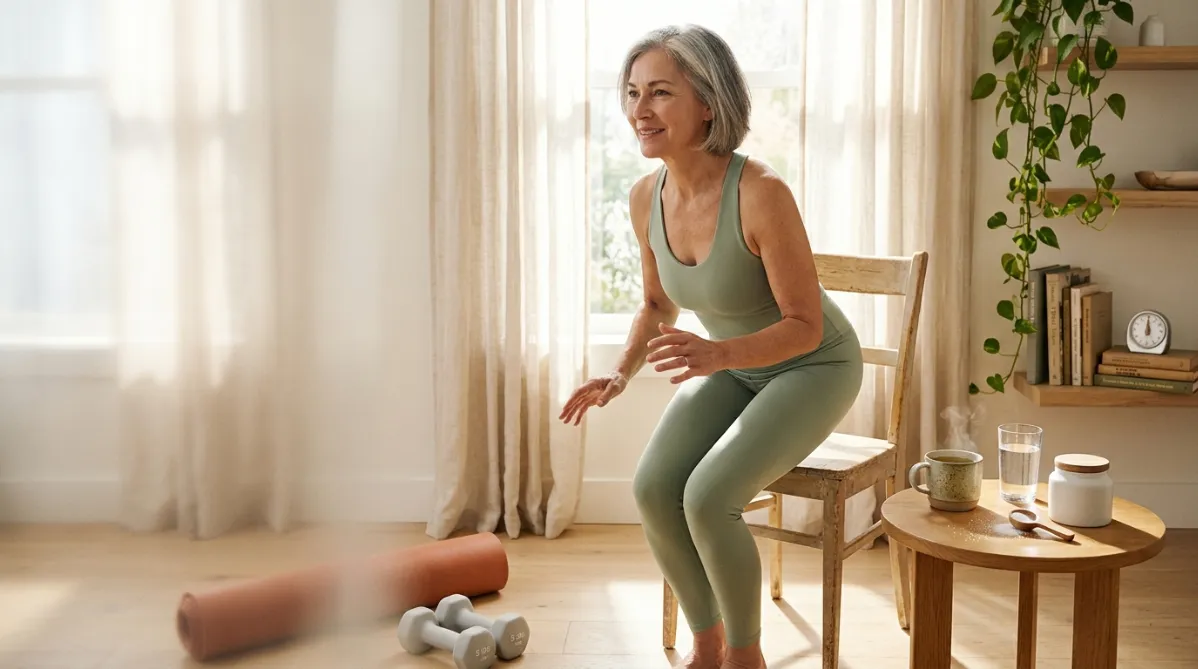
A wide landscape editorial photograph of a bright, airy sunlit living room with pale oak floors and a large window with sheer linen curtains. In the center, a woman in her late 50s with silver-streaked hair, wearing soft sage-green athletic wear, rises from a simple wooden chair, caught mid-motion with a calm, determined expression. Her hands are lightly extended forward for balance. Beside her on a small round oak side table sits a ceramic mug of tea, a glass of water, and a small matte white jar with a wooden scoop resting beside it, a few fine white crystalline grains scattered on the tabletop. In the soft-focus foreground, a pair of light-gray dumbbells and a rolled terracotta-colored yoga mat rest on the floor. A trailing green pothos plant spills from a shelf in the background, with a stack of books and a small analog kitchen timer nearby.

The color palette is warm and muted: cream, sage green, soft terracotta, natural wood, and gentle morning-gold light. Light streams diagonally across the scene, creating long soft shadows and a subtle glow on the woman's shoulders. Shallow depth of field blurs the background gently, while the woman and the table remain crisp. The composition follows the rule of thirds, with the woman on the right and generous negative space on the left, suited for headline overlay. The mood is hopeful, grounded, and modern, like a high-end wellness magazine or a trendy health journal. Natural film-like grain, soft contrast, and a slight matte finish give it a contemporary lifestyle photography feel. There are no futuristic elements, no digital overlays, and no text.
science research

La creatina ha aiutato le donne con ginocchia problematiche a rialzarsi meglio, ma non per i motivi che pensi

BY DR. GYMBRO ·

La creatina è solita essere proposta ai giovani sollevatori, ma una sperimentazione randomizzata, in doppio cieco, l'ha testata su donne in postmenopausa con osteoartrosi del ginocchio. Dopo 12 settimane di allenamento delle gambe, il punteggio del test di alzata dalla sedia è passato da 15,7 a 18,1 nel gruppo creatina, mentre quello del placebo è rimasto quasi invariato (15,0‑15,2). La creatina ha inoltre migliorato la rigidità, la massa magra e la qualità della vita, ma non ha ridotto il dolore né aumentato la forza massima alla pressa rispetto al placebo. Ecco cosa dicono i numeri e a chi potrebbe davvero giovare.
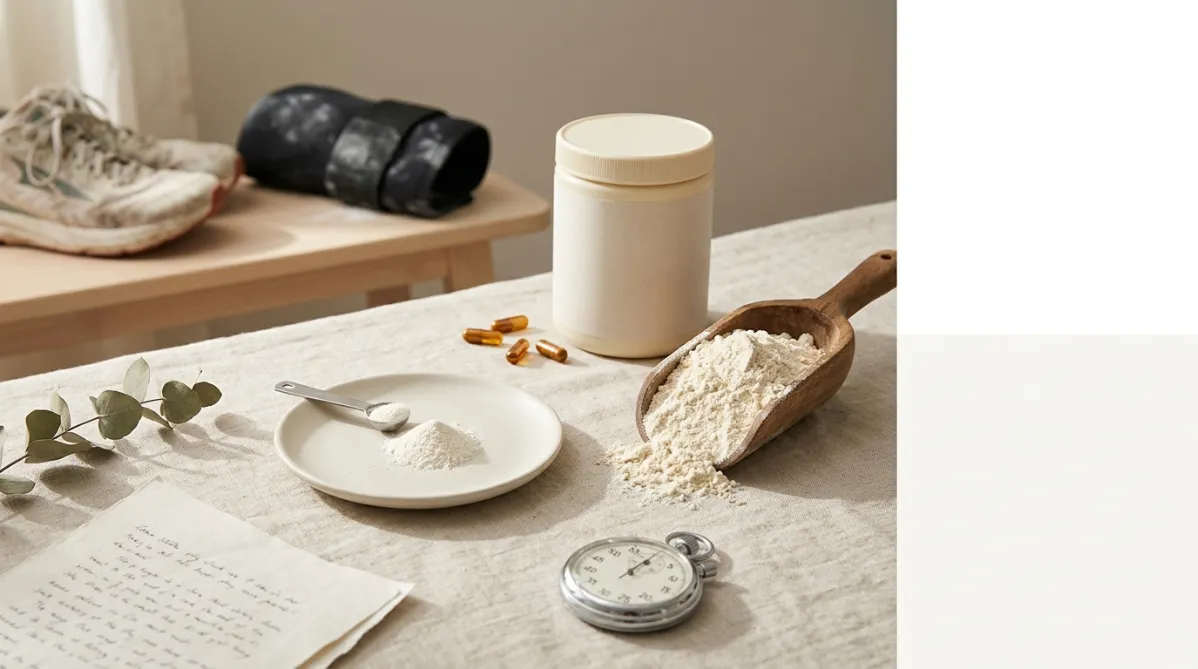
A wide, softly lit editorial still life on a pale oatmeal-colored linen surface, shot from a slightly elevated three-quarter angle. In the center-left, a small matte ceramic dish holds a tiny pile of fine white powder, with a single minuscule measuring spoon resting beside it. To the right, a much larger wooden scoop is heaped high with the same pale powder, spilling gently onto the linen, creating a striking visual contrast of tiny versus large quantity. Behind them, a cream-colored supplement tub with a blank, minimalist label sits slightly out of focus, along with a few amber glass capsules scattered casually.

In the soft-focus background, a runner's well-worn sneaker and a chalk-dusted, wrapped knee sleeve rest on a light ash-wood bench, hinting at gym and road without showing a person. A thin brushed-steel stopwatch lies in the foreground, its hands paused, subtly suggesting timing and endurance. A sprig of dried eucalyptus and a folded sheet of paper with out-of-focus handwritten notes add a quiet, editorial research feel.

Natural morning light streams in from the left through a sheer curtain, casting long, gentle shadows and a warm, creamy glow. The palette is restrained and modern: warm ivory, sand, soft sage green, muted terracotta, and touches of brushed silver. Shallow depth of field with crisp detail on the powders and stopwatch, creamy bokeh in the background. The composition leaves open negative space on the right third for headline text. The overall mood is calm, trustworthy, and contemporary, like a premium health and wellness journal cover, with fine film-like grain and clean, minimalist styling.
recovery

Una dose di 40 mg di collagene raddoppia il tempo prima del dolore al ginocchio. Ecco il trucco

BY DR. GYMBRO ·

Gonfi le ginocchia sotto il bilanciere o durante la corsa? Uno studio randomizzato ha scoperto che solo 40 mg al giorno di collagene di tipo II non denaturato (UC‑II) ritardano la comparsa del dolore al ginocchio da 1,4 a 2,8 minuti e migliorano l’estensione dell’articolazione. Si tratta di una quantità circa 250 volte inferiore a una tipica porzione di 10 g di collagene idrolizzato, ed è un prodotto completamente diverso. Lo studio, però, è piccolo, finanziato dall’industria e ha coinvolto soggetti sani, non pazienti artritici. Ecco cosa dicono i dati, il contesto necessario per il titolo e come interpretare l’etichetta.
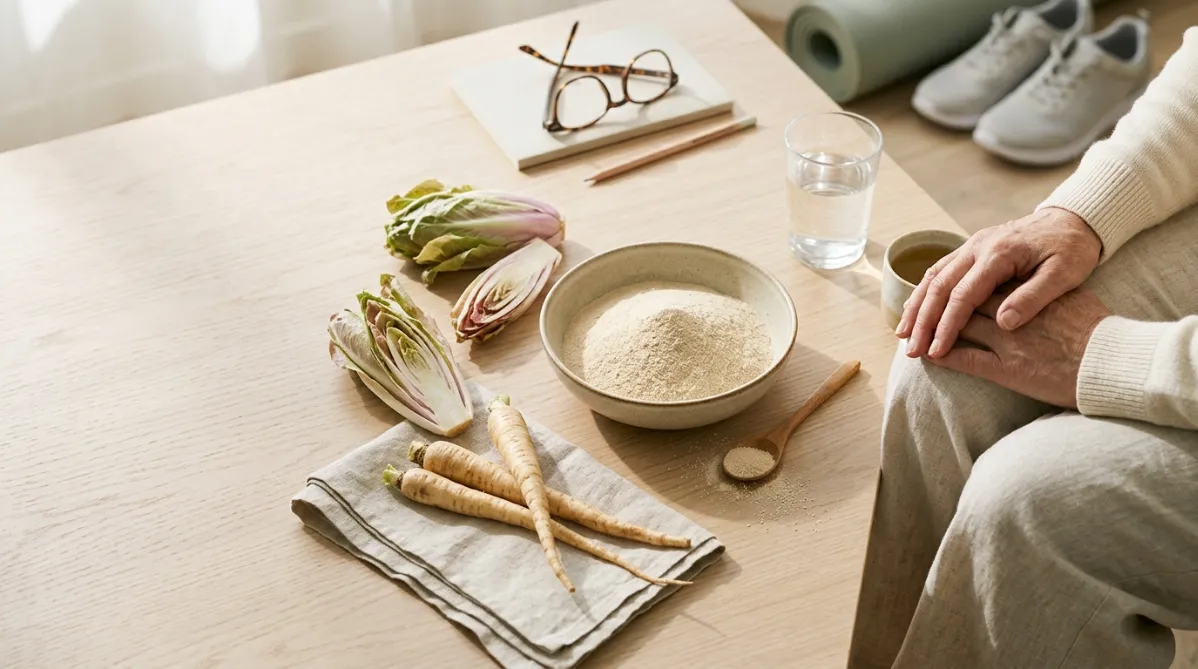
A bright, airy editorial still life photographed from slightly above on a pale oak table in soft morning window light. At the center sits a shallow ceramic bowl in matte oatmeal glaze filled with fine, creamy-beige inulin powder. A wooden spoon rests beside it, with a few fine grains scattered across the wood. Around the bowl, several fresh chicory roots with pale tan skin and delicate taper lie on a folded linen napkin. Next to them are a few crisp, leafy chicory heads in muted green and soft magenta tones, and a halved root that shows its pale, fibrous interior.

On the right side of the frame, a pair of older adult hands in a soft cream knit sleeve rest gently on a knee covered by relaxed linen trousers. A glass of water stands nearby, along with a small ceramic cup of herbal tea. A folded pair of simple tortoiseshell reading glasses and a minimalist notebook with a thin pencil sit in the background, hinting at a considered, research-minded atmosphere. A slim yoga mat edge and a pair of light-gray walking shoes appear softly out of focus in the far corner, suggesting gentle exercise and mobility without overwhelming the scene.

The color palette is calm and modern: warm creams, sage green, soft terracotta, and touches of dusty rose from the chicory leaves. Shadows are gentle and long, with natural light raking across the table and highlighting the textures of powder, linen, wood, and root. The depth of field is shallow, with the bowl and roots in crisp focus and the background melting into a creamy blur. The composition leaves generous negative space on the left third of the frame, suitable for headline overlay, and the overall feel is clean, wholesome, and contemporary, like a lifestyle-meets-science feature in a trendy online health journal. Fine film-like grain, true-to-life color, and a quiet, optimistic mood.
recovery

Una fibra intestinale economica batte il placebo per il dolore al ginocchio: riduzione di 1,11 punti

BY DR. GYMBRO ·

Una fibra di radice di cicoria a basso costo ha superato il placebo nella riduzione del dolore al ginocchio in uno studio randomizzato. Un’assunzione di 20 g al giorno di inulina ha diminuito il dolore di 1,11 punti, superando la soglia clinicamente significativa di 1 punto, e ha anche migliorato la forza di presa. Solo i gruppi che hanno assunto inulina hanno mostrato un aumento di butirrato e GLP‑1, suggerendo un possibile legame intestino‑muscolo. I partecipanti erano adulti anziani con osteoartrosi del ginocchio (età media 67,5 anni); l’esercizio fisico supportato dalla fisioterapia ha ridotto il dolore ancora di più (1,55 punti). Scopri i risultati dello studio, i suoi limiti e come usarli in modo sensato.

This page is available in